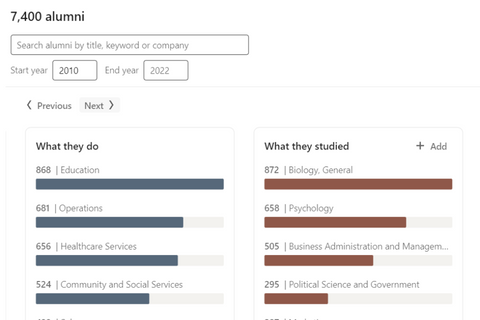
Building a strong network is about creating genuine relationships, not collecting contacts or asking strangers for jobs. Your network can include classmates, faculty, alumni, coworkers, supervisors, family members, and professionals in fields that interest you. Use these resources to identify and expand your network, connect with people through LinkedIn, start productive conversations, and stay engaged with the people you meet. The relationships you build now can provide advice, new perspectives, introductions, and opportunities throughout your career.
Traditional networking methods can feel daunting for neurodivergent individuals, whether it’s the sensory overload of crowded spaces or the pressure of navigating small talk. Online communities, on the other hand, offer a low-pressure, more controlled environment where you can build …
Job fairs assume you can stand for hours. Networking events happen in inaccessible venues. Coffee meetings require transportation that may not accommodate mobility devices. For job seekers with disabilities, conventional career advice often ignores these realities. Online networking offers an …
disABLEDperson, Inc. is a 501(c)3 non-profit organization whose mission is to reduce the high unemployment rate of individuals with disabilities. "We are simply here to serve."
If you know you should be networking but don’t know where to get started this is the episode for you! Or maybe you have been going to networking events but you’re unsure if you’re making the most of them, then …
Networking isn’t about having all the answers—it’s about building relationships, asking good questions, and showing curiosity. The people you meet now may open doors for you later.
A great internship is full of potential for your career. For starters, an internship can provide a direct path to full-time employment, but this isn’t necessarily a guarantee. Something you can always control is the way in which you interact …
A comprehensive resource for students and job seekers looking for career advice, job postings, company reviews from employees, and rankings of the best companies and industry employers.
Explore occupations by career categories and pathways and use real time labor market data to power your decision making.
First, choose an industry of interest, then filter for occupation. (If you'd like to see data for a specific location only, filter by state.)
01
Occupation Description
02
Employment Trends
03
Top Employers
04
Education Levels
05
Annual Earnings
06
Technical Skills
07
Core Competencies
08
Job Titles
Occupation Description
Employment Trends
The number of jobs in the career for the past two years, the current year, and projections for the next 10 years. Job counts include both employed and self-employed persons, and do not distinguish between full- and part-time jobs. Sources include Emsi industry data, staffing patterns, and OES data.
Top Employers
These companies are currently hiring for .
Education Levels
The educational attainment percentage breakdown for a career (e.g. the percentage of people in the career who hold Bachelor’s Degrees vs. Associate Degrees). Educational attainment levels are provided by O*NET.
Annual Earnings
Earnings figures are based on OES data from the BLS and include base rate, cost of living allowances, guaranteed pay, hazardous-duty pay, incentive pay (including commissions and bonuses), on-call pay, and tips.
Technical Skills
A list of hard skills associated with a given career ordered by the number of unique job postings which ask for those skills.
Core Competencies
The skills for the career. The "importance" is how relevant the ability is to the occupation: scale of 1-5. The "level" is the proficiency required by the occupation: scale of 0-100. Results are sorted by importance first, then level.
Job Titles
A list of job titles for all unique postings in a given career, sorted by frequency.